What is Artificial Intelligence?
Late at night, a pharmacy in Beijing had its door pushed open by an elderly person holding a feverish child. She expected to wait for a while, but instead saw a silver humanoid robot smoothly navigating the shelves, using its mechanical arm to precisely grab medication and package it. Minutes later, the robot delivered the medicine to the pickup point.
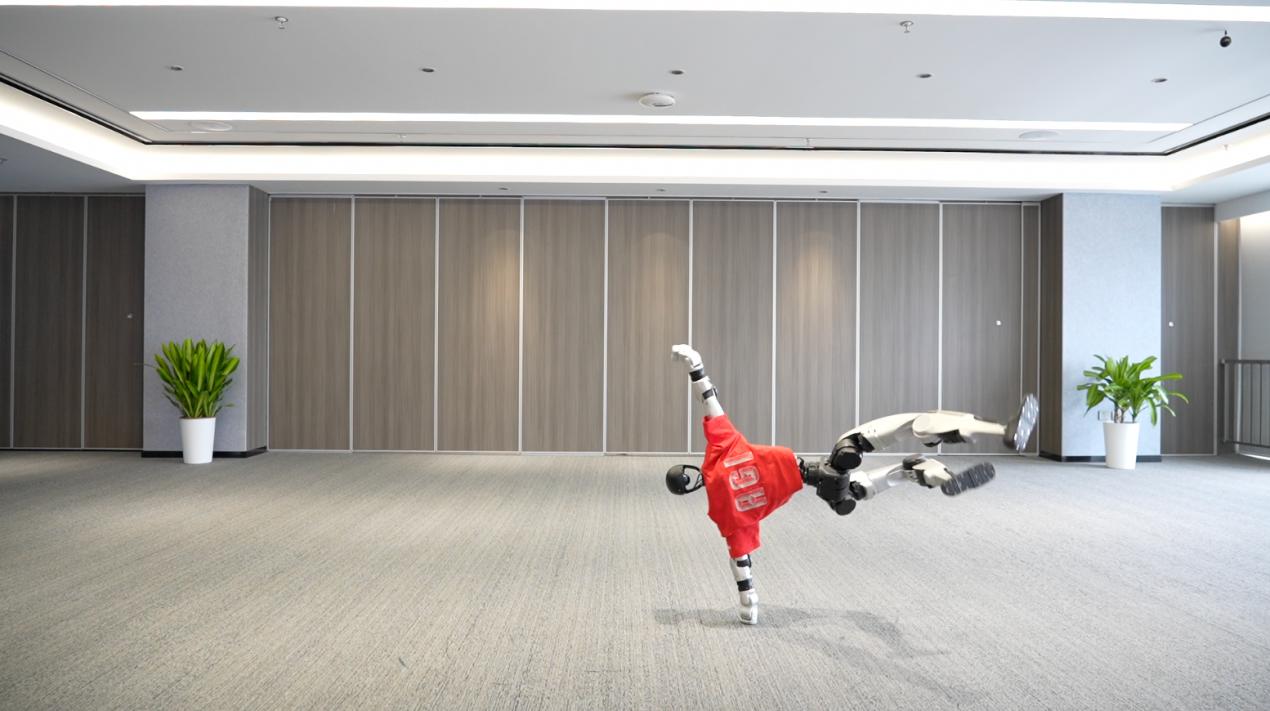
This robot, named Galbot, has just received a formal pharmaceutical business license, becoming China’s first legally permitted robot to sell medicine. It operates tirelessly, enabling the pharmacy to remain open 24 hours a day, addressing the issue that less than 10% of pharmacies operate around the clock, despite nighttime orders accounting for 20% of total purchases.
Galbot, along with conversational AI like Siri, content-generating tools like ChatGPT, and quality inspection systems in factories, are all examples of “artificial intelligence.” But what exactly is artificial intelligence? Does it truly “think” like a human?
How Intelligent is AI? A Metaphor for Understanding
You can think of all the AI you encounter today as a super intern. This intern has a unique characteristic: it may excel at specific tasks assigned to it, even outperforming human experts, but it cannot generalize its knowledge.
- If tasked with identifying diseases in a vast number of retinal images, it can achieve 95% accuracy and produce a report in 5 seconds, while a doctor may take 5-10 minutes. However, it cannot interpret X-rays or diagnose patients.
- If asked to write poetry, code, or summarize reports, it can generate impressive content. Yet, it does not understand sarcasm or the true meaning of “love.”
- If it controls a robotic arm to weld a 30-ton ship keel, it can do so 1.7 times more efficiently than a skilled worker, but it does not comprehend that welding is necessary to prevent the ship from sinking.
In specialized fields, this “super intern” represents narrow AI. It embodies the essence of all current AI applications: focused on specific areas, it develops extraordinary “pattern recognition” abilities through vast amounts of data, yet lacks general understanding and true consciousness across different domains.
The AI we fantasize about, capable of learning anything and possessing self-awareness, is referred to as artificial general intelligence (AGI). This remains a concept in science fiction and theoretical discussions, far from reality.
How Does This Robot “Think” and “Act”?
To accomplish the task of “dispensing medicine,” AI systems like Galbot rely on the precise collaboration of four core modules, akin to the key steps of human intelligence:
1. Perception: Its “Eyes” and “Ears”
The robot’s cameras and LiDAR act as its eyes, continuously scanning the shelves and surroundings to identify medication packaging and assess distances. When you use voice input on your phone, AI is also “listening.” This step corresponds to human vision and hearing, utilizing computer vision and speech recognition technologies.
2. Reasoning and Decision-Making: Its “Brain”
Upon receiving an order for “Ibuprofen Suspension,” the system accesses its knowledge base to determine, “This medication is in aisle A, row 3, shelf 2,” and then plans the optimal movement and grabbing path. In finance, AI analyzes corporate data to decide on loan approvals. This step corresponds to human cognitive judgment.
3. Learning: Its “Experience Accumulation”
AI is not inherently capable of finding medication. It learns by analyzing thousands of grabbing attempts, continuously fine-tuning the arm’s force and angle to make its actions more stable and faster. This process is called machine learning, which is fundamental to AI becoming “smarter.” ChatGPT also learns from vast amounts of text to organize language effectively.
4. Execution and Interaction: Its “Hands” and “Mouth”
Once a decision is made, instructions are sent to the robotic arm and wheels to execute grabbing and moving. Simultaneously, it may communicate through voice or a screen, saying, “Please pick up your medication.” This represents the final output and interaction.
Thus, AI is not a magical black box; it is a precise cycle of “perception - reasoning - learning - action.” When Galbot runs through a warehouse, it completes this cycle in full.

Beyond Dispensing Medicine: Where Else is AI Changing the World?
This “super intern” has infiltrated various industries, becoming a “genetic-level” tool for enhancing efficiency:
- In Healthcare: Portable AI retinal cameras can complete scans in community settings in 3 minutes, identifying not only eye diseases but also assessing risks for heart attacks, diabetes, and other chronic conditions, serving over 4 million people.
- In Factories: AI quality inspection systems can identify defects as small as 0.1 millimeters in milliseconds, improving product quality by an average of 20.5% and reducing operational costs by 18.4%. Dangerous repetitive tasks like welding and spraying are increasingly being taken over by robots.
- In Finance: Banks use AI to analyze corporate patents and team data, transitioning from evaluating physical collateral to assessing intellectual property, serving over 80% of tech-listed companies nationwide.
- In Everyday Life: Children use AI tools to learn idioms, the elderly have AI voice companions to alleviate loneliness, and even your essays may be reviewed by AI teaching assistants before submission.

What Will Future AI Look Like?
Despite its ubiquity, today’s AI still has significant limitations. Experts point out that its greatest shortcoming is a lack of understanding of the fundamental laws of the physical world—it does not comprehend gravity or friction, making it difficult to make autonomous decisions in complex real-world situations. This often leads to autonomous vehicles and robots making errors when they leave predefined environments.
Future evolution aims to overcome these limitations:
- From “Problem Solving” to “Task Management”: Zhou Bowen, director of the Shanghai Artificial Intelligence Laboratory, predicts that the next step for AI will be to handle complex real-world tasks without standard answers, such as coordinating projects or managing customer complaints.

- Truly “Understanding” the Real World: Kevin Kelly, founding editor of Wired magazine, argues that AI needs to learn basic knowledge of physics and chemistry to allow robots to genuinely integrate into homes and communities.
- Becoming Your “Digital Agent”: In the future, everyone may have an AI assistant that manages schedules, communications, and even collaborates with other AIs on your behalf, forming a vast “agent economy.”
So, returning to the initial question: What is artificial intelligence?
It is not a science fiction monster that will replace humans, but rather a system of technologies that enables machines to simulate human perception, reasoning, learning, and action capabilities in specific domains. Currently, it remains a powerful “domain expert” rather than an all-encompassing “generalist.” Its essence is as a tool, a lever that extends human capabilities.
Understanding this allows us to shed fear or myth and truly learn to collaborate with this powerful “intern” to solve more concrete and real issues, such as “where to buy medicine for a feverish child late at night.”
Comments
Discussion is powered by Giscus (GitHub Discussions). Add
repo,repoID,category, andcategoryIDunder[params.comments.giscus]inhugo.tomlusing the values from the Giscus setup tool.