How Teachers Can Use AI for Personal Growth
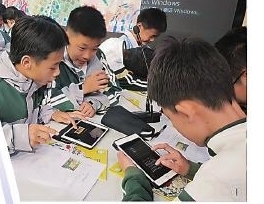
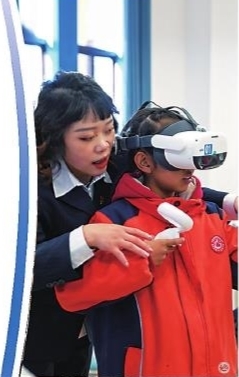
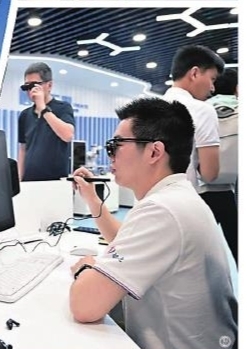
Currently, enabling artificial intelligence (AI) in education has become a pressing question. In the face of the irreversible trend of generative AI (GenAI) integrating into the entire educational process, teachers should effectively utilize GenAI to truly serve educational goals. Specifically, teachers can actively explore how to use GenAI from three aspects: improving efficiency, promoting development, and maintaining ethical boundaries.
1. Improving Efficiency: Optimize the Teaching Process with GenAI
The most apparent role of GenAI is to assist teachers in “reducing burdens and increasing efficiency,” freeing them from heavy administrative tasks and allowing them to reallocate time and energy towards comprehensive student development.
Firstly, teachers can leverage generative AI to efficiently handle repetitive tasks such as data organization, meeting minutes, and assignment statistics, thus freeing up more time and energy to focus on core educational work like character building and value guidance. Additionally, GenAI can quickly generate various teaching resources such as teaching images, mind maps, knowledge cards, micro-course scripts, and evaluation rubrics, significantly reducing the time spent on resource searching and production, thereby enhancing lesson preparation efficiency. This is currently the most common way frontline teachers use generative AI.
Secondly, GenAI can assist in generating classroom exercises, alleviating the burden of repetitive design tasks. Teachers often struggle with designing differentiated and variant practice questions. By inputting specific knowledge points, question types, and difficulty levels into the GenAI platform, they can choose to generate new questions or retrieve real exam questions. It is important to note that teachers need to professionally evaluate and review the generated or retrieved questions, retaining content that aligns with educational goals and curriculum standards. Furthermore, they should dynamically adjust and personalize the questions based on students’ actual levels, and if necessary, adapt or reorganize them for classroom practice or homework.
Finally, GenAI empowers interdisciplinary teaching, which is another area where it can provide deep support. Unlike individual teachers with a single subject background, GenAI has strong knowledge integration capabilities, offering teachers interdisciplinary knowledge links, case materials, and teaching design ideas. Specifically, teachers can establish a dedicated “interdisciplinary teaching AI agent”. First, they should build a subject knowledge base by categorizing and organizing curriculum standards, textbooks for various educational stages, personal lesson plans, and teaching reflections. Based on this foundation, they can generate the AI agent using the GenAI platform and continuously optimize its dialogue logic, enabling it to generate learning tasks and activity designs with an interdisciplinary perspective based on the subject content. Once the AI agent is established, teachers can generate interdisciplinary inquiry tasks according to teaching objectives and content, implementing them in the classroom after assessing and adjusting based on student learning conditions. More importantly, teachers can continuously feed the learning outcomes generated in class and their own teaching reflections back into the AI agent’s knowledge base, forming a feedback loop of “use—accumulate—optimize—reuse,” achieving mutual growth in teaching.
2. Promoting Development: Empower Teacher Professional Growth with GenAI
The leap in teacher professional growth often occurs through deep reflection and discussion about the classroom. GenAI can not only help teachers manage daily teaching tasks but also serve as a “cognitive partner” for their post-class professional development, assisting teachers in transitioning from experience reliance to evidence-driven practice.
GenAI supports classroom diagnostic analysis, moving from intuition to evidence-based insights. Unlike traditional classroom evaluations that primarily rely on experience, teachers can upload classroom recordings to the GenAI platform to obtain analysis reports covering various dimensions such as teaching structure, behaviors, strategies, and effectiveness, which they can then interpret professionally in conjunction with their teaching intentions. It is essential to emphasize that GenAI provides the analysis “draft,” and the professional interpretation by teachers is what imparts educational significance to the data.
GenAI supports human-machine collaborative research, shifting from passive reception to active inquiry. Having a classroom analysis report is not enough; teachers need to engage in deep discussions around specific teaching segments. For instance, during classroom research, teachers can use GenAI as a cognitive partner, asking precise and in-depth questions to analyze classroom phenomena, gather practical evidence, and achieve teaching improvements. In simple terms, teachers can adopt a “thick and thin questioning” strategy to engage in multiple rounds of dialogue with GenAI. “Thinning the lesson” focuses on a specific teaching segment, initiating a chain of questions based on the logic of “what happened → what was good/bad → what evidence exists → why → what teaching patterns were discovered”. “Thickening the lesson” further questions from the essence: “Under what conditions might this teaching pattern fail? How can it be improved? What is the basis? What will happen after the improvement?” This expands teachers’ understanding of the classroom in both breadth and depth.
Throughout this process, teachers remain the primary questioners, while GenAI is responsible for providing data analysis, evidence retrieval, and multi-role perspective support, collaboratively achieving a deeper understanding of teaching from phenomena to essence.
GenAI aids teachers in accumulating wisdom, transitioning from fragmented insights to continuous growth. Insights emerging from each post-class research session can easily fade over time if not organized. GenAI can help teachers structure and extract core viewpoints from their research into practical knowledge, generating mind map-style research notes that include teaching design logic, effective teaching method evidence, and improvement suggestions. Teachers can then supplement and refine these notes to form a knowledge accumulation that aligns with their cognitive style. Additionally, with multiple research sessions, GenAI can assist teachers in constructing a dynamically updated “personal professional growth knowledge base,” allowing teaching practices to be visually traced. Teachers can transcend the limitations of single teaching instances and examine their teaching over a longer time frame, accurately identifying teaching inertia that needs to be broken and effective practices worth maintaining.
3. Maintaining Ethical Boundaries: Navigating Three Key Boundaries to Avoid Technological Alienation
The premise of effectively utilizing GenAI is to maintain ethical boundaries. No technology can replace the critical role of teachers in emotional guidance, value shaping, and thought stimulation. Therefore, teachers need to uphold ethical boundaries throughout the entire process of applying GenAI.
Firstly, maintain the technological boundary. Teachers should reasonably define the division of labor between humans and machines, allowing GenAI to handle auxiliary tasks such as information retrieval and resource organization, while retaining creative teaching activities like lesson design and classroom interaction organization in their hands. At the same time, teachers should guide students to form a healthy understanding of human-machine collaboration. For example, in the classroom, they can advocate a “think before use” rule for technology application, encouraging students to think independently first before using GenAI to expand ideas or optimize expressions.
Secondly, maintain the value boundary. In critical educational moments involving value guidance and emotional care, teachers should retain their leading role. For instance, when students express family troubles or growth dilemmas in their writing, GenAI may recognize the emotional tone of the text, but whether a follow-up conversation is needed, whether to contact parents, and how to provide appropriate care and encouragement in feedback are all value judgments that only teachers can make. The warmth of education always comes from humans, not machines.
Thirdly, maintain the ethical boundary. On one hand, teachers need to maintain a cautious attitude towards the content generated by GenAI, rigorously reviewing and correcting it to ensure it meets curriculum standards and subject-specific norms; on the other hand, teachers must pay attention to protecting the privacy of personal and student data, avoiding uploading unconsented and non-anonymized materials directly to non-locally deployed GenAI platforms for processing.
In the era of intelligence, the rapid advancement of technology compels teachers to continuously learn, reflect, and innovate. Teachers need to actively embrace new technologies and innovate in education and teaching. When teachers become proficient and enthusiastic about using generative AI, they can help find a new balance between efficiency and warmth in education.
Comments
Discussion is powered by Giscus (GitHub Discussions). Add
repo,repoID,category, andcategoryIDunder[params.comments.giscus]inhugo.tomlusing the values from the Giscus setup tool.